About Me

My photo
Erik is a public policy professional and owner of the online training course in democracy and civic action: www.3ptraining.com.au The Blog …explores ways to create a sustainable and just community. Explores how that community can be best protected at all levels including social policy/economics/ military. The Book Erik’s autobiography is a humorous read about serious things. It concerns living in the bush, wilderness, home education, spirituality, and activism. Finding Home is available from Amazon, Barnes&Noble and all good e-book sellers.
Showing posts with label Global financial crisis and community resilience. Show all posts

Sunday, 23 February 2014

Tasmanian State Election - Building Resilience through Public Policy


How Tasmania can Prosper – the Conversations we Have to Have

Well its election time again in the great State of Tasmania. I initially set out to write a political commentary to help local readers better exercise their civic duty (voting is compulsory in Australia) but changed my mind. Instead I have tried to answer the question: “what would have to change for Tasmania to become economically self supporting?” It is a question with wider implications because Tasmania is a marginalised peripheral economy. There are lots of them in the world and we can learn from what works elsewhere.

So rather than talking about who to vote for, let’s talk about what we need….I don’t have all the answers but I would like to start a conversation, so here goes….


Evidence Based Policy....

Tasmania is stuck in a hole. It is a welfare dependent State in which forty per cent of the adult population are on some form of welfare/pension, youth unemployment is around 20 per cent, a handful of large foreign based businesses call the shots, the population is ageing and unwell, and the political class spend their time on wedge social issues and slagging the other team instead of figuring out how to fix things.


The thing that most needs fixing is the fact that almost everything that is spent on retail, insurance, chattel and home mortgages, business finance, gambling, much of our hospitality, and increasingly food, leaves the State to line the pockets of people who live somewhere else. Vast amounts of money have been made from mining but Tasmania is littered with dead, dying or just plain poor mining towns. The money is not here. Mining the Tarkine will help some folk for a time but it will not fix our economy. In my opinion things will only improve if we find an economic model that keeps our wealth circulating at home.


Here is an imaginary story based on real world examples that have worked elsewhere. Not all of these initiatives are necessary and not all are possible, but all are worth talking about.


“Once upon a time Tasmania established a State Bank which could issue its own credit. The bank was given the same charter initially given to the Commonwealth Bank of Australia and for the same reasons. In addition the Bank provided small business finance at below market rates to foster and encourage small business. In addition the Government offered State based insurance for basic insurances on a not-for-profit basis. In this way a huge amount of money was kept in the State that would otherwise have left. Shares in both the State bank and the insurer were issued to all long term residents thus circulating money within the local economy. In addition to issuing dollars the State bank issues each long term resident with a ‘Taz’ which was time limited currency only recognised in the State. This had an immediate stimulatory effect on business by encouraging spending and preventing hoarding. The government also sponsored an Island wide ‘Community Exchange System’ or ‘tally system’ which allowed the exchange of goods and services without money. This system enabled persons with low incomes but with skills, to participate more fully in the economy and community. It increased business activity and strengthened the social fabric. Being untaxed it could also be considered an indirect form of economic assistance.


The Government appointed a Small Business Minister who soon learnt that the chief concern of small business was the cost of electricity, and that small business and consumers heavily subsidised a handful of bulk industrial power users. The Minister also found that small business was the single greatest employer outside the public service. The Government therefore mandated a single electricity price for all users in the State. This led to a dramatic increase in small business confidence and consequent uplift in employment. Bulk power users were concerned about how this might impact their viability but a ‘supply and demand’ study found that there was abundant electricity if it were not exported to Australia via Bass Link. From that time on only surplus electricity was exported and importation of electricity was banned. However the State continued to invest in wind power as a natural compliment to base load hydro electricity increasing security of supply and exporting the surplus. Income from exports was then used to drive down the domestic price or re-invested in further production.


The Small Business Minister also learnt that there was no effective civil enforcement mechanism for non-payment of debts. The law was modified to allow persons to obtain a ‘debtors judgement’ in the Courts and have that judgement enforced on a fee for service basis by the Monetary Penalties Enforcement Service. Assurance of debt recovery boosted business confidence.

 
This success in stimulating small business led to some serious debate about taxation policy. The new Government put a proposal to the Commonwealth to make Tasmania a ‘special economic zone’ in which all taxes were abolished except for GST, company tax, resource royalties, personal income tax; and taxes on alcohol, sugary drinks, and imported tobacco. Abolished taxes included FID, stamp duty on cars and homes, motor vehicle registration, land tax, capital gains tax, air port taxes, and taxes on employment. In addition council rates were found to be a poll tax where rates were based on the nominal value of a property rather than a fee for a service. Councils were obliged to radically restructure their rates. Those that were found to be unviable were merged. Motor vehicle owners were obliged to pay into an insurance fund – either the State insurer or a private equivalent, for medical care. These changes in themselves saved a great deal of bureaucracy and encouraged investment and employment. Removing a tax on motor vehicle registration was particularly beneficial to farmers and other businesses.


However all of this tax cutting led to something of a funding crisis for the public service which had already been asked to ‘do more with less’. The Government addressed this firstly by making a law allowing Departments to reduce staff hours as an alternative to redundancy. This copied the approach adopted by Germany during the GFC. It enabled cost cutting during hard times but kept critical skills, corporate memory and social capital within the public service, avoided a crisis of confidence, and kept money circulating. It also avoided the former ‘boom and bust’ approach where the public service grew during the good times then faced harsh redundancies during the harsh times.


The first Department to be tackled was Health and Human Services. The Government knew that it would never be able to provide a comprehensive public health system in Tasmania. This has been understood by academics and health professionals for over 20 years and reflects the situation in the rest of rural Australia. The Government also realised that Australia failed to tackle the emerging national health crises in part because the health system is run by and for the benefit of doctors and medical specialists. Further, legal liability increased the cost of medicine because medical practitioners feel safer referring patients to specialists. This has led to a dumbing down of general practise. In tackling these issues the Government set out the following policy road map:


·        Limit liability and the amount of liability claims by law, and provide a State sponsored not-for-profit professional indemnity scheme for medical professionals.

·        To the greatest extent possible for a state government, implement the recommendations of the Productivity Commission Report into Health Workforce (Australia’s Health Workforce, Productivity Commission Research Report, Productivity Commission 11 December 2005). See further: http://www.pc.gov.au/projects/study/health-workforce/docs/finalreport

·        Allow appropriately trained nurses to perform most of the treatment and diagnosis currently performed by GPs, both privately and in the public system, under remote supervision by a doctor.

·        Protect the practise of midwifery in private homes.

·        Trial delivery models for treatment in patient’s homes thereby freeing up hospital beds.

·        Trial delivery models for outsourcing medical treatment to developing countries.

·        Trial delivery models for web based analysis of medical data from specialists outside Australia where this is more cost effective.

·        Remove restrictions on intake numbers to surgery and medical specialist courses.

·        Properly fund medical student placements so that medical graduates are not obliged to pay ‘up-front’ and do not graduate with a substantial debt.

·        Restrict sugar, salt and fat content in drinks and processed foods.

·        Tax sugary drinks in the same way that cigarettes and tobacco are taxed.

·        Enact plain packaging for cigarettes.

While taxing imported tobacco the Government legalised the domestic production of tobacco for sale and personal use. As a result many people stopped inhaling tobacco laced with herbicides and pesticides in favour of less addictive organic leaf. These reforms over time delivered significantly better health outcomes and led to savings in the hospital system.


The next major area of reform was in education. Noting that previous State by State comparisons were unfair because Tasmania is part of regional/rural Australia, the Government compared educational outcomes against rural Victoria. While these results were more encouraging they were still found to be poor compared to OECD averages. The Government discovered that a decade of chaos with constantly changing curricula, constantly changing structures, and school closures had led to teacher burn out, loss of experienced staff, and lower educational outcomes. The Education Minister also learnt that in Tasmania a person can qualify as a teacher based on a university ‘pass’ of 49 per cent. This was lifted to 60 per cent overall, and 90 per cent in spelling, grammar and maths. The Minister also learnt that, while the requirements to qualify as a teacher in Tasmania are among the lowest in the developed world, the requirements to maintain registration are amongst the most onerous. This created a brain deficit at one end and a brain drain at the other. The Government moved to reverse that situation.


The Minister also found that:

·        Immigration, family breakdown and autism, have a negative impact on academic outcomes. It is simply not possible for a class room teacher to cater to high and complex needs, whatever their origin.

·        The state education system does not invest in bright students. There is no gifted education program in Tasmanian State schools, although gifted children both need more support than average, and provide a greater return on investment.

·        Many classes are chaotic and stressful because teachers have no effective tools of discipline and many parents do not discipline their children.

In light of the above the following approach was adopted:

·        rejecting the doctrine of ‘mainstreaming’ children in favour of special classes, and potentially special schools, where children with high and complex needs had some chance of getting their needs met;

·        advancing children according to their ability not according to their age;

·        abolishing teacher registration by shifting the onus of hiring competent staff to school principles;

·        shifting funding away from buildings and technology towards supporting class room teachers;

·        keeping focus on core competencies in maths, spelling, grammar and science;

·        supporting the right of parents to education their children subject to reasonable oversight by the Tasmanian Home Education Advisory Council;

·        increasing the age of compulsory schooling from five to six for girls and seven for boys in line with research on neurological development, particularly in boys; and

·        allowing appropriate disciplinary options for classroom teachers (following discussion with parent bodies).

The next area tackled was the criminal justice system....but the State Service Act prevents me from writing about it....

In tackling these issues the Government adopted the following policies. First they developed a realistic housing policy which is discussed later. Then they ...did another bunch of stuff I am not allowed to write about...

Tasmania had unfortunately inherited Australia’s decade long housing crisis. The self evident failure of the market mechanism to house families was identified as an exacerbating factor in almost every other social ill including crime and family breakdown. The Government conducted an audit of all vacant Crown land to which services could reasonably be connected then put low cost dwellings on that land. Initially these were pre-fabricated shipping containers that were fitted out at the prison as part of a ‘pay for incarceration for work’ scheme and as a trades training program. As modular units these could be configured to house anywhere from one person to a family of five as they are in Holland. Closed school buildings were re-modelled to hostel style accommodation. Various public/private partnership models were explored. In addition building and council regulations were changed to emphasise shelter over middle class ideals of housing. While the regulatory issues were initially complex, living in huts, sheds, shipping containers, and vehicles became a legal and viable alternative to housing insecurity and homelessness.


Having addressed health, education, justice and housing, the Government turned its attention to supporting agriculture. Unlike the Australian Government, the new Tasmania realised that not all investment is good, and that the buy-up of productive land by Chinese State companies did not reflect the operation of the free market, but rather reflected the foreign policy of the Communist Government of China. Sale of agricultural land to persons not resident in Tasmania was banned but Tasmanian farmers were allowed to lease land to foreign interests subject to a national interest test and limited to a 30 year lease.


Tasmanian retained its market niche by banning GM crops on the Island but actively encouraged establishment of an industrial hemp industry for the production various products including clothing, paper, food, oils, ethanol, and building materials. In time this came to be a major crop alongside poppies and essential oils. The Government did not invest money in irrigation although the State Bank was prepared to lend on favourable terms. However a comprehensive environmental impact statement examining salinity water table issues was always required. Similarly any person who wished to undertake coal seam fracking was required to prove that there would be no impact on the water table, and to conduct small monitored trials. This had the effect of banning fracking from most parts of the State. In recognition of the rights of farmers, the Government allowed farmers rights to all of their land to the centre of the earth and the right to deny access to it.


The new Government continued to respect the Forest agreement, recognising that industry had initiated negotiations, all parties had made compromises, and that the agreement was key to gaining recognition and international markets. The Government also commissioned a study into potential commercial uses of plantation timbers including composite structural timbers, log cabins, firewood, and combustion for electricity generation.


Those pushing for a Tasmanian Republic suggested that it could avoid buying expensive military toys and protect its territorial integrity by maintaining a citizen army. Military service would be compulsory after high school and would double as health and fitness training. Each person who was assessed as ‘fit to bear arms’ would be issued one and this weapon was kept under lock and key at local police stations to be issued in the event of war or insurrection, and for training. The police would became part of the new military structure thus creating greater linkages between the police and young people. Genuine conscientious objectors would not be obliged to participate. It was suggested that the Republic of Tasmania should be able to put around 80,000 people under arms – the same number as the Australian army.”


Thursday, 25 July 2013

Preparing for Global Financial Crisis 3 – Building Financial Resilience


“It was the best of times, it was the worst of times..”

So begins Charles Dickens’ famous novel ‘A Tale of Two Cities’. It is an apt metaphor for our times.

The richest one hundredth of one per cent have never gotten so rich so fast. The rest of us haven’t been so thoroughly screwed over since 1929 and there is more to come. The good news is that people are now sensing that the emperor is indeed naked and new ways of doing commerce are not only being talked about, they are actually working. More-over we are seeing a shift in perception as significant perhaps as that which followed Martin Luther nailing his thesis to that big old door at the local Cathedral in Wittenberg (about which read more in my book)! The following video provides some background.

Money and Life


In my previous posts I touched briefly on how the current financial system has become de-linked from the real economy to the extent that it is now predatory upon it. We explored what I term ‘Biblical capitalism’ as an alternative capitalist model, and looked at what we can learn from those groups that have best weathered the GFC – the Amish, and the Islamic banking sector. It is now time to cast the net wider.


How are people surviving the GFC and what is working in practice?

In researching this question I found four things that are working stupendously well.  They are local time limited currency, community exchange systems, worker take-overs of factories, and the free economy.


Local time limited currency

One of the strangest experiences I had following a long bushwalk (5 days) was handing some cash over a counter and getting stuff in return. It felt unreal. The food I got was real. But after five days immersed in nature the bit of plastic impregnated paper I handed over seem unreal – ephemeral, disconnected. Something someone just made up – because money is just made up. Banks create it out of nothing and so can we.


In the 1930’s German mines and towns were threatened with closure and starvation for lack of available currency. With hyperinflation any currency they did get devalued so quickly it was barely worth getting. Faced with the imminent collapse of their businesses and communities local authorities and companies simply issued their own currency. The currencies they issued were time limited to prevent hoarding and were used as tender for certain goods or within defined communities. Their communities, factories and mines kept going, and public works flourished until local currencies were stamped out by the central bank in the early 1930’s. It is worth reflecting that if the German central bank had encouraged this innovation Hitler might be a footnote to the successful history of the Weimar Republic and WWII in Europe might not have happened (see further here: http://www.guardian.co.uk/commentisfree/2009/jan/20/george-monbiot-recession-currencies).


Well, the Europeans are at it again. In towns across France and Southern Europe local currencies are being issued and are once again rescuing local economies. After all, the productive capacity of those communities hasn’t changed; all that has is the movement of computer code on distant servers representing something that doesn’t exist, owned by people who don’t care, controlled by people who don’t contribute.


Note however that local currencies work best as a compliment to the national currency, and like all currencies, there needs to be a match-up between the amount in circulation and the value of the goods and services traded. For a discussion of local currencies in Europe see here: http://www.cafebabel.co.uk/politics/article/alternative-local-currencies-in-europe-money-must-be-funny.html
 
For a bit of a clue about where the 'real' currency is going see below:


Community Exchange Systems

A community exchange system is essentially a tally system where goods and services are exchanged by members of the system and tallied on a database accessible to all members. The beauty of this system is that it works entirely outside of the money economy (although some exchanges may be tax liable). This has enormous benefits for people who have skills but little income – retirees, unemployed, and poor people in developing countries – since money is no barrier to participation. The benefit for those on fixed incomes is that they don’t have to earn the money and pay tax on it before spending it in order to buy things. You can just exchange and your money stays in your bank. That frees more money to pay down debt or to invest, or simply survive. The benefits for business are that they can reach a bigger market for their products and services. They are also seen to be good corporate citizens.


There are hundreds of CES setups (also known as LETs) worldwide. I read one estimate of USD 10Billion equivalent in trades but no one really knows. Like local currency these are also complimentary systems but are growing rapidly in reach and scope. Conceptually there is no reason why most domestic commerce could not happen this way. To gain a fuller understanding of the practical workings and philosophy of CES setups I suggest starting with their own websites. The peak one for Australia is here: http://www.communityexchange.net.au/ Note that you can join one or start your own with freeware available here: http://www.gmlets.u-net.com/zips/index.html


Worker take-overs of factories

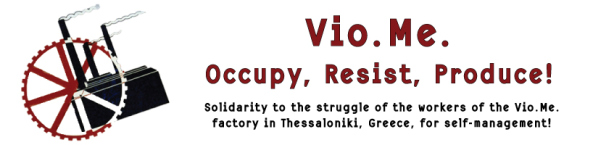
A factory starved of funds and in debt closes. The workers occupy it, take physical control of the machinery, elect a management group, incorporate a cooperative, and keep working. This has happened in hundreds of factories in the last few years, mostly in Argentina and Brazil, but also in Greece. The thing I love about this (apart from the obvious good things) is that it makes non-sense of the traditional worker/boss, socialist/capitalist divide. You could call it ‘social capitalism’. Make no mistake - these are privately owned commercial enterprises selling products in a competitive market place. The difference is that the workers are making money for themselves and their families, not for the share profits of people in other countries. Anecdotally these arrangements have worked best in small to medium enterprises with local markets, but there is nothing wrong with that! See further: (http://www.solidarityeconomy.net/2012/07/08/argentinas-200-recovered-factories-a-new-global-trend/comment-page-1/#comment-81008/ ).


The freeconomy

This is the most unlikely sounding option. There is no real exchange. You join a group. You indicate the kind of stuff you do for free or give away. You do it for free or give it away. Other people do the same for you. That’s it. See further here (http://www.moneylessmanifesto.org/about-the-author/ ) OK the whole world can’t work that way but it is working very well for some things – notably hot showers (for cyclists and backpackers) and homestays. While it attracts a fair amount of derision it is growing in popularity in Britain and Ireland and is making a helpful contribution to combating real poverty. In a way it is what the Amish and countless other communities in the developing world do all the time – it’s just that it is considered radical in industrialised countries.

Doubtless new ways of cooperative commerce will evolve with time.

 
Tag Line: Mondagon, solidarity economy, freeconomy, community exchange systems, CES, LETs, GFC, global financial crisis, federal reserve, Islamic banking
 

Global Financial Crisis, Biblical Capitalism, and the case for What Works


OK so the GFC isn’t all that bad. Granted real unemployment is over 20 per cent in many countries, an entire generation have lost their life savings, hundreds of banks have collapsed, one in seven Americans is living on food stamps, bankruptcies, suicides and broken dreams stalk the land, and the social fabric is unravelling, but it could be worse. For starters the richest one per cent of North Americans have more than doubled their wealth. US Congress can still afford to spend US$300 billion plus plus on a fighter plane that doesn’t work …and then there is the historical perspective.


The last time we had a financial melt-down on this scale was 1929. Millions starved. In Germany the majority voted for a centre left government but austerity forced by the banks and by the treaty of Versailles created the conditions for extremism. In Germany, Italy and Spain it was the Nazi’s who won out. The rest is history.


What is astounding about this round of global financial rorting isn’t that it happened, or that no one has gone to jail, or that there has been no real financial reform, or that the people who created the crisis profited from it, or that the rest of us are paying. What is astounding is that there has been very little critique of system itself among the mainstream commentariate, and even less advocacy of an alternative system. After-all, three simple laws would stop these events and associated wars both now and forever. They are:

1.      ban derivative financial instruments;

2.      all contracts must be non-transferable and non-saleable to a third party; and

3.      restrict futures contracts to agricultural products (where they actually help farmers).

This is not to say that there are no other useful measures such as a Tobin tax, or that these three measures alone would stop economic bubbles or inflation – these are facts of economic life. However they would have stopped the Great Depression, World War Two in Europe, GFC 1 in the USA and GFC 2 in Europe. Oh, and the sharks haven’t finished feeding yet. GFC 3 is on its way…


On the one hand this sort of regulation would stop women dying in child birth because they can’t afford privatised medicine. On the other hand it would force speculators to make a living by actually producing something. For that reason it is not a policy option in any OECD country.


So what is the alternative? Despite the obvious and demonstrable failure of the free market / endless consumption / endless economic growth / exponential population growth model, it appears immune because there is no alternative meta narrative. Nazism is an unfortunate memory. Communism is discredited. State cronyism is facing hard limits in China, Russia and Iran. Social democracies in which the State distributes some of the wealth and provides for social goods like education and health care have fared the best. This has been Australia's story but it is hardly an 'ism' and we remain exposed through a free trade policy, high levels of foreign ownership and a floating currency.
 
Environmentalism sounds the alarm but you have to look a long way to find a comprehensive alternative global economic model or transition strategy. The Other Economic Summit (TOES) was an attempt at this. So is the moneyless economy. The anti-globalist movement has much to say but sometimes forgets that capitalism isn’t just an evil conspiracy – its’ how normal people actually behave. Trade is good and there is simply nothing wrong with a person who has two cows selling one and buying a bull.
 
The current system has failed because the monetary economy became de-linked from the real economy. When you have a fractional reserve lending system that allows banks to lend ten times what is deposited with them, and then a shadow financial system based on derivative contracts which is over twenty times bigger than the money system (some estimates go as high as 100 times), you have an inverted pyramid with the real economy at the bottom dwarfed by the imaginary economy of obscure financial instruments at the top. Inverted pyramids are inherently unstable and so the current monetary system has proved to be.


Those with an eye to what works have noticed two groups/sectors that have both weathered the storm with equanimity and prospered. They are the Islamic banking sector and the Amish, and lesser known groups that adopt similar principles.


These groups come with their own baggage of course. This includes misogyny, patriarchy, homophobia, harsh conformity and anti-intellectualism. OK, so headscarves, unrestrained fecundity and literal six day creationism may not be your thing, but can we learn something from these people? Is there a case for Biblical capitalism? I think there is. I intend to explore this in my next post.


Note: any irony you detected in this post was intentional.
 
Tag Line: GFC, Global Financial Crisis, Islamic Banking, Amish, Amish Banking, The Other Economic Summit TOES, EU Financial Crisis, Moneyless Manifesto, self reliance, self sufficiency

Sunday, 14 July 2013

GFC, Islamic Banking, and the Next War


“Allow me to issue a nation’s currency and I care not who makes its laws”  Rothschild
 
In my previous post I wrote about Biblical capitalism but noted that the church never developed a clear set of financial rules. Islam however, claiming as it does to offer a ‘whole of society’ alternative, has in the last few decades become much more engaged.
 
Islamic Banking
A couple of thousand years after the Hebrew prophets did their thing Mohamed appropriated the Old Testament for his own purposes and expanded on a number of financial themes. However it wasn’t until the 1970’s that Islamic economic scholars began to develop a hard set of financial rules which became the Islamic banking sector. That sector continues to flourish. There are several keys to this flourishing.
1.      Islamic banks don’t deal in derivative instruments so were relatively fire-walled from the GFC.
2.      They are culturally more risk averse – excessive risk taking being seen as immoral.
3.      They deal in actual property. An Islamic bank will not lend at interest so you can buy a car. However they will buy the car and re-sell it to you at a higher price to be paid by fixed instalments over an agreed period.
4.      ‘Interest’ is paid through fixed instalment contracts so there is no variable rate of interest. There are pro’s and con’s to this arrangement but it does create stability.
5.      Islamic banks tend to be better capitalised.
 
The extent to which Islamic banks are fundamentally different from conventional banking remains controversial (see for example: https://openknowledge.worldbank.org/bitstream/handle/10986/3929/WPS5446.pdf?sequence=1). They key differences appear to be a focus on real assets, greater capitalisation, stable ‘interest’ payments, and an aversion to dealing in derivatives. One doesn’t have to be a Koranic scholar to realise that this makes sense if you want to generate real economic activity rather than speculative gains. Islamic banks still only hold one per cent of global financial assets but they are experiencing double digit growth rather than seeking public bailouts.
 
Ironically a good deal of fiscal conservatism was legislated by the Western Powers after the Second World War. Keynes recommended fire-walling different parts of the economy so that if one part went down it wouldn’t bring down the economy as a whole. This basic approach to finance led to a raft of regulation which has been steadily dismantled since the 1980’s with predictable, and predicted, results.
 
An alternative approach?
What would the world look like if the global financial system was run on principles inherent in Biblical/Islamic capitalism? Or if religious terminology freaks you out, what if we returned to common sense?
 
With few exceptions only real goods or services would be traded, and those agreements could not themselves be traded. In other words:
·      there would be no currency speculation. Goods and services could be traded in different currencies and those currencies exchanged, but currency itself could not be bought, exchanged or traded
·      all interest rates would essentially be fixed
·      all lending would be backed by hard assets
·      there would be no bond market beyond the initial purchase of a bond
·      there would be no futures market beyond the initial futures contract
·      there would be no market in packaged financial products
·      communities would generate their own credit based solely on the tangible wealth of that community
 
Would the world really be worse off?
 
Admittedly there would be some inefficiencies and inconveniences for some people.


Speculators couldn’t make a living solely out of speculation. Economic activity would slow and economic growth might take a downward turn in some areas. This would be extremely irritating for a lot of people. There would be a lot of bleating about ‘freedom’ and ‘development’.
 
On the other hand the GFC is pretty inconvenient too. So was the crash of 1929 which, as I mentioned in my previous post, led to the Second World War in Europe. In this context we might let history be our guide and consider for example how many Germans died of starvation before, during and after WWII.
 
Let’s mention the war
WWII ended the British Empire, devastated much of Eurasia, brought America to the ascendancy, led in time to the creation of a multitude of independent states and associated conflicts, and ushered in the Cold War. These are not trivial issues, and if the GFC of 1929 led to war, we have to ask ourselves, could it happen again?
 
Frankly the Nazis had a point – not about Jews or invading the world, or bumping off anyone they didn’t happen to like – but about banking. Why should German people starve because of excessive risk taking by American banks and the wealthiest one per cent? No one else was prepared to stand up to the banks, tell the international community to get stuffed and re-vitalise the economy. Hitler did; and found jobs for a generation of disenfranchised and unemployed young men. There are many reasons why Hitler had a fanatical following but one of them is because there was no demonstrable alternative. OK so the Nazi’s were an aberration, but poverty always leads to war, internal or external. What alternatives do we have in our day? I don’t profess to have the answer but history and the Bible surely give us some clues, and we had better find an answer fast – nature abhors a vacuum and our current state of non-leadership is, well, vacuous.
 
Another war? In the 1920’s talk of another war was considered absurd and people (including Churchill) who warned of the coming catastrophe were considered unhinged, war mongers, or communists. Nevertheless the war happened and we were not prepared. The powers of State and corporate surveillance, propaganda and repression, are so much more sophisticated now – it would be much harder for extremist movements to succeed…but there are countries with little to lose. Indonesia has over 200 million Muslims who cannot take a massive cut in living standards and feed themselves. If we learn nothing else from the last great depression it is that when people are starving, war and political violence surely follow. That's why financial regulation matters - because its the powerful undercurrents of international finance, not the political froth on top, that really directs where we go.


Next post: Why Environmentalists Should Care About the Military – and why Australia is vulnerable.
 
Tag line:  Islamic banking, Biblical capitalism, GFC, Global Financial crisis, alternative economics, Keynes, financial regulation, Rothschild.
 

Thursday, 4 July 2013

Biblical Capitalism, the Amish, and the GFC


Once upon a time people used to swap things. It was called trade. Some people were better at swapping things than others. Some people were able to make more things and store more food than others. They had more than they needed so they did more swapping, that is, they traded surplus. This was great but people wanted to be able to swap with people they might only meet once, or might never meet at all. This was made possible by a substitute from of exchange called “money”.


The creation of currency led to a great leap forward in human development. People began to trust money so much that they would give goods to someone who promised to pay them what the goods were worth plus some more, if they didn’t have to pay until later. That was called credit. If they couldn’t pay, they had to return the goods. These kinds of arrangements gradually kept getting more and more complicated. Governments started issuing sovereign bond for example, someone invented insurance, and people could invest in enterprises for a share of the profit.

As complicated as these developments became they had something in common with our very first swappers. There were two parties, an agreement, and a good or service was provided. Money was generated from surplus wealth and then re-invested. Money was simply a way of helping us honour our agreements between ourselves to exchange goods and services.


Because credit was based on the lender having a surplus it encouraged enterprise, thrift, saving, and productivity in order to generate a surplus. You either did this yourself, or you owned the means of production, such as land, slaves, serfs etc. In Biblical times this was how money was understood. The main issues of controversy were providing for the poor (through gleanings for example), allowing fair (though not always equal) wages, not extorting, respecting private property and inheritance, and not charging excessive interest or taxation. The Biblical prophets were quick to condemn what trade law today calls ‘unconscionable conduct’ with respect to the vulnerable – widows and orphans. This is what might broadly be termed ‘Biblical capitalism’. It was as fair as it could be in pre-literate societies, and it worked. The church however never established a clear set of economic rules that could give modern expression to ancient principles so things drifted along.


Now we have a fractional reserve lending system which allows private bodies to create money out of thin air and lend at interest. Agreements between two parties can be bought and sold electronically in seconds. Money and certain contracts have become tradeable commodities in themselves. In this way the financial system has become de-linked from the real economy. Money no longer serves us, the economy, or the community, we serve it - except the Amish and their Mennonite cousins don’t. 


They continue to trade and bank as they have done for three hundred years based on what they consider to be Biblical principles. None of them is spectacularly wealthy but their communities are prosperous and no one is hungry. It’s pretty simple:

·        You work hard from a young age;

·        You don’t buy stuff you don’t need (no consumerism);

·        You don’t try and keep up with anyone (no marketing propaganda);

·        You look after your family first (they are your cause and your security);

·        You generate a surplus through saving (no credit cards);

·        You use that surplus to invest in the means of production: land, plant and equipment etc. (No parties and drinking saves a lot of money);

·        You make more money;

·        You have more children;

·        You leave an inheritance (like your parents did for you, rather than having to borrow to get a start in life, then pay for your family, then fund your parent’s retirement, then fund yours);

·        You don’t owe much (because you don’t spend much), you pay what you owe fast, and to delay payment of any debt is stealing;

·        You sleep well at night and everyone goes to your funeral. Chances are you or a close friend builds your coffin.


There are now a plethora of books about the Amish, some of them quite misty eyed. I don’t think I could be Amish. I like art, music, travel and science too much, but I have to give them credit. The Amish/Mennonite have never had a financial crisis, a great depression, a war, austerity, or handed over control of their lives to the State. Banks that mostly lend to the Amish have weathered the GFC just fine. If nothing else the Amish are living proof that credit driven consumerism and highly leveraged debts are choices, not as it were, ‘acts of God’, and there are other ways of living.


On a personal note I have not used a credit card since 2001 when I had to use one to travel on our honeymoon. We are a middle income single income family. We have a home mortgage but apart from that if I can’t afford stuff I don’t buy it. We have the same television we were given in 2001 and I have never bought one. I ride the same bicycle I had when I was 17 but I am now considering electric bike options as an alternative to driving. I’m a consumer to be sure but I like to save and I hate debt…


Next post: Islamic banking
 
Tag line: GFC, Global Financial Crisis, Amish, Amish Banking, Amish Businesss, Mennonite, alternative economics, Biblical capitalism, monetarism, fractional lending, investment