About Me

My photo
Erik is a public policy professional and owner of the online training course in democracy and civic action: www.3ptraining.com.au The Blog …explores ways to create a sustainable and just community. Explores how that community can be best protected at all levels including social policy/economics/ military. The Book Erik’s autobiography is a humorous read about serious things. It concerns living in the bush, wilderness, home education, spirituality, and activism. Finding Home is available from Amazon, Barnes&Noble and all good e-book sellers.
Showing posts with label ABRI. Show all posts

Monday, 30 September 2013

Why Environmentalists Should Care about Defence


So why have I just posted five articles on Australia’s vulnerability to invasion on a left leaning environmentalist blog? The answer quite simply, is that you can only protect what you can defend; be it the environment, human rights, or any other value.


On the rare occasions that environmentalists talk about Defence it is usually in an eye rolling ‘I can’t believe they spend so much money on this stuff for no reason’ kind of way. This is usually followed by concerns over disposal of toxic stuff (aircraft fuel, depleted uranium rounds, spent nuclear rods etc), the effects of sonar on whales, and sometimes a grudging aside that the military can be helpful in disaster relief because they have lots of helicopters…and that’s about it. This was, more or less, the response I got from Christine Milne when I spoke to her recently at a celebration of the World Heritage Area extension, (that’s the one Abbott wants to repeal, and which environmentalists have been fighting for since 1973). The Greens have a Defence Policy but it is really just a statement of principles and lacks any real substance.

Underlying this intellectual sloth is a kind of unspoken assumption that if we (rich Western people) were nicer to the rest of the world wars wouldn’t happen, so we wouldn’t need to worry about defence. Didn’t work so well for the Celts when the Romans showed up, or too well for the Romans when the Goths showed up but hey…. After spending five years trying to even talk to any Green politician about Defence without success I have given up.

With all respect to the eco-anarchists, if you want national parks, marine reserves, restrictions on extractive activity etc, you need a nation state that is able and willing to enforce those restrictions. It really doesn’t matter how many marine reserves Australia declares in the Coral Sea, if there is no naval presence, international fishing interests will just keep fishing.

War is indeed unhealthy for children and other living things but war is a fact. In 1985 an Indonesian official bluntly asked Kim Beazley what Australia would do if Indonesia invaded Papua New Guinea. Beazley to his credit said that we would fight to the last man. A key reason why Indonesia did not invade PNG, and did not send its army against UN forces in Timor Leste, is because we had the F-111 bomber (that was so beloved of Beazley). Now we don’t and on current trends Australia will not be able to defend PNG in 2030. What of human rights? What of PNG’s super diverse environment? Why do the Greens and the Left generally oppose Australia having an offensive military capability? What exactly do they think will happen?

Facing no serious military threat to their existence most Western nations now see military matters in terms of policing, and coalition operations against developing nations. Australia does not have that luxury. It’s an uncomfortable and unacknowledged truth that the greatest threat to our natural treasures may not be global warming, but Javanese expansionism. Invasion is the ultimate form of privatisation. War is trade by other means.

So is there any real possibility that the Javanese empire (aka Indonesia) could extend their transmigration program to Australia, or as Indonesian generals prefer to call it “Iryan Selatan” or “South Iryan”? The future intentions of any nation, and the Javanese in-particular, are inscrutable. What the preceding five articles show is that, on current trends, invasion is possible. If we do not build a defence force that provides a reasonable power balance, we put at risk both ourselves and the smaller countries to our north and east. It’s time the Left and the Greens in-particular grew up, left the ideological sand-pit, and started dealing with the world as it really is.


Indonesian special forces with the bodies of the GAM guerrillas they killed. Photogaph taken near Nasi Besar Island in May 2003. While Australian politicians and Defence bureaucrats play their little games, the Indonesians play for real.

Tag line: Greens security policy, Christine Milne, Australian defence policy, pacifism, ABRI, TNI, transmigration, human rights Iryan Jaya, human rights Timor Leste, F-111 bomber, PNG security, Pacifc Rim security and strategic policy.
 

Tuesday, 24 September 2013

Deterring Invasion – towards an evidence-based defence strategy for Australia


Introduction
The previous four articles considered how Australia would fare in a war with Indonesia circa 2030 based on current trends. These articles found that Australia would be convincingly defeated in a high tempo conventional war based on known facts and reasonable projections. Further, the assumptions in the articles were weighted in Australia’s favour and did not allow for the likely proliferation of stealth fighters, cruise missiles and ISR capabilities across South East Asia.

This article considers what, in light of this, the ADF needs in order to deter regional aggression and to ensure victory in the event of open conflict with our northern neighbour.


PAK-FA deadlier than anything in the Western air inventory except the F-22. Arriving in our backyard soon.

 
Structural Change

After a decade of wasted opportunities and tragic bungles Defence is now demonstrably incapable of evidence based rational defence planning or acquisition. A recent list of debacles includes:

  • retiring the F-111 based on known untruths about its maintainability;
  • ordering the Joint Strike Fighter without reference to price, delivery schedule, capability, or reference threats;
  • ordering the Superhornet as a gap filler without reference to capability or reference threats;
  • repeating known untruths to Parliament;
  • repeating known untruths to the Minister;
  • failing to maintain the Collins submarines in a reasonable state of operational readiness;
  • failing to acknowledge the existence of Russian and Chinese stealth aircraft; and
  • ordering anti-submarine torpedoes from a European consortium but failing to check that the instruction manuals were in English.
While some of these decisions were ultimately made by government they were made based on advice from, and in some cases long running campaigns by, the Defence bureaucracy.

In the short term this institutionalised incompetence and intellectual vacuity can be turned around only if independent expert boards reporting to the Minister and to Parliament are established to critique Defence analysis, and provide alternative analysis, questions, and direction.

In the longer term the current leadership of Defence needs to be replaced with individuals with relevant technical qualifications and operational experience. There have been numerous reports into how to better structure Defence, a discussion of which is beyond the scope of this blog.


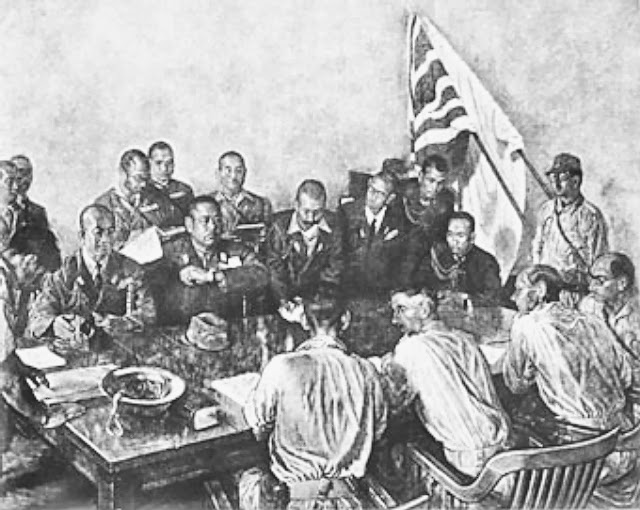
Depicted is a consequence of replacing analysis with supposition - the Fall of Singapore

Air Power

Ultimately choosing an air power platform is a matter for experts but some observations can be made here. The evolved Sukhoi is now the baseline for air power in the Asia Pacific. The only aircraft that can reliably shoot down a late model evolved Sukhoi is a late model evolved Sukhoi. In a rational universe the RAAF would be crying-out for large numbers of these affordable aircraft, and to be a follow on customer for the Indo/Russian PAK-FA stealth version of that aircraft. Indeed, in the ‘stealth on stealth’ multipolar world of coming decades only nations with stealth aircraft in the class of the PAK-FA, J-22 or F-22 can guarantee their security without a nuclear deterrence. The JSF has no relevance to this environment (see further here and here). Air Power Australia cites a loss exchange ratio of 50 'legacy' aircraft including the Superhornet for one PAK-FA. The loss exchange ratio against the JSF is quoted as exceeding 4:1 in favour of the PAK-FA. (Note that this analysis is now a little dated and the known deficiencies in the JSF program will push the exchange ratio higher in favour of the PAK-FA).

However it seems that for emotional and diplomatic reasons no one in the Defence community and no Australian government will ever buy military equipment from Russia.

The American F-22 Raptor is in many respects the superlative combat aircraft of our time enjoying all aspect stealth, thrust vectoring, and a respectable weapons load. Unfortunately production was stopped short of  200 units. Even if Australia were to acquire some, supportability would become an issue in the longer term unless the Americans were to re-start the assembly line and commence building significant numbers of these aircraft. Who knows whether this will happen, and time is running out to replace the RAAF’s legacy Hornets.

As noted previously, neither the Joint Strike Fighter nor the Superhornet are survivable in the air power environment of the Asia Pacific now, far less in 2030. For some recent 'Deep Throat' revelations on the Joint Strike Fighter that were published in Vanity Fair, see here.

That leaves Australia with a choice of the F-15 series which is still in production (Korea purchased the F-15K), and the Euro canards. The F-15 is not a match for the Sukhoi but is a twin engine Mach 2+ modern combat aircraft. In sufficient numbers it could make life difficult for Indonesian Sukhois, more so if recent difficulties with the standard USAF air-to-air missile (AIM-120 series) are fixed.

Of the Euro canards there are three. Of these one stands out for affordability, sustainability, and a growth path that includes supercruise (the capacity for sustained supersonic flight without the use of afterburners). That is the Swedish JAS Gripen which also has the distinction of being able to land and take-off on short strips of road, and maintain a high tempo of operation. One of the attractions of the Euro canards is the superiority of European air-to-air missiles over those carried by US aircraft. See further http://www.saabgroup.com/en/Air/Gripen-Fighter-System/


For countries with limited budgets mobile surface-to-air missile systems (SAMs) provide an affordable force multiplier to aircraft. When integrated with ground based radar, AEWACs and fighter planes, you have what is called an ‘integrated air defence system’ or ‘IADS’. This is the smartest and most affordable approach for defence of Australia’s military and economics assets across the north – far more so than investing in very expensive air warfare destroyers.

So on my reckoning an effective RAAF could field 72 JAS Gripen from hardened air fields and dispersed runways across northern Australia in addition to around 36 twin engine interceptors. Ideally these would be the PAK-FA or if circumstances allowed, the F-22. If neither of these is possible the next best option is the F-15. These would be supplemented by mobile SAM systems protecting land forces, military bases, airfields, and key industrial assets. This force is affordable, deployable, available, flexible and deadly.

What about the Superhornets and JSF? Australia is committed to the purchase of 14 JSF. Since that aircraft has no operational relevance, the best thing we could do is sell them back to the Americans at half the price and claw back some money. The Superhornets on the other hand could occupy niche roles. As a naval platform they are designed for naval strike and could be fielded in that role. They might also fill a role in tanker and AEWACs escort. As a second tier ‘second day of war’ plane they could usefully be tasked to the close air support role. This would help fill some gaps in the ADF force structure, namely lack of modern artillery, lack of land missiles, and lack of armour. They could conceivably come under command of the Australian Army.

Sea Power

The defence of Australia will occur on, over, and under the shallow waters to our north. That requires investment in 8-10 ‘off the shelf’ conventional European subs based in Northern Australia. If Australia wishes to obtain a capability to engage in military operations in the Northern hemisphere or to hold at risk sea lanes far afield for extended periods, an ‘off-the-shelf’ purchase of the US Virginia class nuclear attack submarine fills that niche with none of the expense and risk of a home built/modified machine. A combined force of conventional and nuclear subs allows Australia to operate each capability to its maximum advantage. Further, if one platform develops a problem the whole fleet is not lost. Investment in a capable submarine force and capable air force obviates the need for expensive surface combat vessels. The Air Warfare Destroyers should be sold off. Australia’s need in surface vessels is primarily for anti-submarine warfare and border protection which calls for modern frigates.

Land Power

To a large extent investment in a capable submarine force and capable air force means savings can be made to land forces as well, if it is assumed that invasion could be stopped short of Australian soil. However it is self-evident that ongoing support is needed to see the ADF land forces ‘hardened and networked’. Further investment in C3I capability will be needed to fully realise the potential of new and existing ADF platforms.

It would make good sense in light of planned acquisitions by the TNI to replace the oldest ASLAVs with a wheeled platform that carries either a tank killing artillery piece or capable anti-tank missiles. This would also add useful capabilities to counter insurgency operations.


Italian light tank – one of several tank killing platforms that would be relevant to Australia.

In addition to an integrated air defence system, it is time defence planners thought seriously about mobile air defence for deployed ADF land forces using a platform such as Pantsyr . The days of assumed air superiority and battlefield intelligence superiority are over.

Weapons of Mass Destruction

If defence acquisition continues as presently planned, or goes in the direction advocated by the Left, Australia will have no conventional means to stop coercive diplomacy or invasion. In that event our choices are few and unpleasant. Nations like Syria or Norway that cannot deter a more powerful aggressor through conventional means have two choices. One is an armed population organised around mass popular resistance supported by a small professional army that can imbed itself in the population. That is the option Norway has chosen. The other is to invest in WMD – biological, chemical, and nuclear agents in order to deter an aggressor. That is the path taken by Syria and Pakistan. I am not advocating either option. I am just pointing out that this is the only alternative for nations unwilling or unable to field a credible military capability. Australia is currently one of those nations.

The good news is that Australia can build a flexible and affordable force capable of safeguarding regional stability – but it can only do so if it considers the evidence.

Notes:

As a middle ranking power Canada has similar defence challenges to Australia but the level of debate and public engagement is much higher. For a detailed analysis of comparative aircraft options see these well researched articles:


Those looking for Australian content will find more on this blog here:


and here


For further analysis on an alternative path for the ADF see the following sponsored links:


Tag line: Australian military strategy, Australian army, network and harden ADF, Land 117, JSF RAAF, Superhornet RAAF, Joint Strike Fighter Pacific, Defence force reform, TNI, ABRI, Indonesian military.


Thursday, 19 September 2013

How Australia Lost the War of 2030 - Part 3


The Land War

In a previous article I speculated that global financial difficulties could impose severe hardship on poor countries that are not self-sufficient in food or fuel. This could, given the right circumstances, lead to war on our doorstep and even invasion.

While no one knows the future we can make real world predictions about how a conflict with our northern neighbour might play out based on the current known strategy and the military acquisition paths of both nations.  In the previous two articles I examined the air war and then the sea war. These articles found that Australia would lose convincingly in a conflict with the Indonesian armed forces (TNI) on current trends post 2030. This article considers the subsequent land war in this scenario.

Force the surrender of opposing ground forces

Let’s for a moment take air power out of the equation. Perhaps both sides have air parity, or perhaps Australia has invested in mobile surface to air missile systems that provide theatre air cover for the army (NB: there are no current plans to do so). How do the ground forces stack up?

Armour

The primary weapon of ground forces is the main battle tank. Australia has 59 second hand American Abrams main battle tanks. Due to budget constraints some have recently been put into storage. Indonesia has or will acquire between 100 and 200 ex NATO Leopard tanks of similar vintage. The two are roughly equivalent since both were designed to defeat Soviet armour. Either way, Australia is outnumbered close to 2:1 or 4:1. Without tanks, any other armour Australia has is irrelevant unless Australia were to invest in another tank killing platform such as the Italian light tank when it considers replacing the older ASLAVs. [Ed note: since this was written Indonesia has signed a contract with Germany for purchase of 103 Leopard tanks and associated equipment and has begun taking delivery. This is in addition to its existing inventory of light armour.]

Helicopters

Australia is currently taking delivery of a fleet of 22 'Tiger' helicopter gunships. These are significant force multipliers carrying two anti-tank missiles each in addition to rockets and cannon. Indonesia currently has no such capability but is on the market for helicopter gunships including the American Apache. That’s an interesting choice because the Apache is a dedicated tank killer designed from the outset to defeat massed attacks by Soviet armour. In other words, you only buy an Apache if you want to engage in nation state conflicts with countries that own main battle tanks. In the local context, that means Australia and Malaysia.

Note that helicopters are not survivable in a contested air environment and Australian helicopters would be easy prey to opposing combat aircraft including ground attack aircraft of which Indonesia intents to own 80 – 36 Hawker, 12 F5E, 16 Tucano and 16 Yak aircraft.


The Apache attack helicopter being sought by the TNI

Artillery

Australia has replaced its towed artillery but has put on-hold investment in modern mobile artillery/rocket systems. Indonesia is pressing ahead with modern investments in this area including the French Caesar system. The Caesar long range mobile artillery system being acquired by TNI. Australia has no equivalent. See further here

 
Infantry

Australia has 80,000 infantry including reserves. Reliable statistics for the TNI are difficult to come by but it appears Indonesia has around 470,000 soldiers of which at least 180,000 are ‘front line’ professional soldiers. Depending on how many troops can be moved and how many needs stay at home we get odds of between 2:1 and 5:1 which doesn’t sound particularly promising. Currently Australian infantry have better night vision and communications equipment but the TNI is developing better capabilities in this area and has only to equip a fifth of its infantry to match then outnumber, the ADF. Being numerically inferior is not a problem if you have superiority in tanks, armoured vehicles and aircraft. However if you only have parity then you have a serious problem. If you are overmatched, you lose.


TNI Marines in combat – Indonesia has a large professional army

Sustainability and supply chain

It is an open secret that the ADF lacks depth in sustainment. What that means is that we don’t have enough reserves of fuel, ammunition, spare parts, technically trained personal, and human infrastructure to sustain a high intensity conflict aka open war.

Rather we are trained and equipped for counter insurgency and coalition operations. We use stuff up and then replace it. Our capacity for sustained national defence against a determined aggressor with modern weapons is doubtful.

Australia is beginning to address this through investments to ‘network and harden’ our land forces. Essentially this is a rolling series of programs to replace and upgrade transport vehicles and communications equipment. If future governments continue to commit substantial funding to this process it will yield results in the 2020 - 2040 time frame but it won’t happen without bi-partisan support.

The TNI on the other hand has its own challenges. Logistically hundreds of vehicles and nearly half a million people are not easily coordinated, supplied, and moved over water. A very substantial naval transport infrastructure would have to be assembled. However Indonesia is developing its blue water capability including capacity for beach landings. A maritime nation with thousands of islands would be expected to do so. It is not cause for alarm but does require careful monitoring. Also, once a base was established on Australian soil the 64 Hercules transport aircraft Indonesia intends to buy could move a lot of kit very quickly. In all likelihood, if the TNI gained air superiority they would cross either the Timor Sea or, having first taken Papua New Guinea and established a forward base, cross the Coral Sea to the eastern side of Cape Tribulation North Queensland. They can ignore Darwin, bomb our northern bases, but move their land forces down the east coast of Australia, establishing military bases and supplying them by sea as they go.


Indonesian soldiers during combat operations in Ache. I once went shooting with guys like these at a target range in Ambon – about which you can read more in my book.


What Happens After ‘Ten’?

We started with the ten points of modern warfare. Number ten was “Disarm surrendered forces and send them home (or massacre them).”

There is no need to speculate about what would happen in Australia if the TNI were to take control. East Timor and Iryan Jaya provide real world examples. The TNI’s habit of ignoring Islamic violence against minorities within Indonesia should also provide a clue. I will spare the detail. It’s not hard to google.

This is not an alarmist post. Indonesia, like all nations, has a natural right to self-defence. From their perspective they have extremely well-armed neighbours to their West, a large and relatively lawless archipelago that harbours extremists to their north, there are separatist movements in Ache and Iryan Jaya, and they lost East Timor following an invasion by UN forces led by Australia. In addition Indonesia is the world’s most populous Islamic country. They are concerned by the rise of atheist China in Asia and by the US habit of invading Muslim countries on false pretexts without UN support. They have 13000 islands and hundreds of ethnic groups to manage. It is unsurprising that they are investing in a capacity for shore landings, submarines, a mobile professional army, and affordable combat aircraft.

What is needed in our region is a reasonable balance of forces. This can be done affordably and without offence by Australia if rational policy decisions are allowed to replace rent seeking within the Defence bureaucracy. This is the topic of my next and subsequent posts.


Tag line:  Australian army, TNI, Indonesian military capability, GAM Ache, network and harden ADF, Australian Abrams tanks, Australian defence policy, Australian and strategic defence policy.